The talk they never published
In 2020 I gave a TEDx talk called “Using Ancient Technologies to Terraform the Earth, First.” The room loved it — it was a hit. Then TEDx never published it, and never gave me an explanation. There was a Facebook livestream of the event, and I kept copies — so here it is, finally, on my own site, where it can’t get buried.
The idea
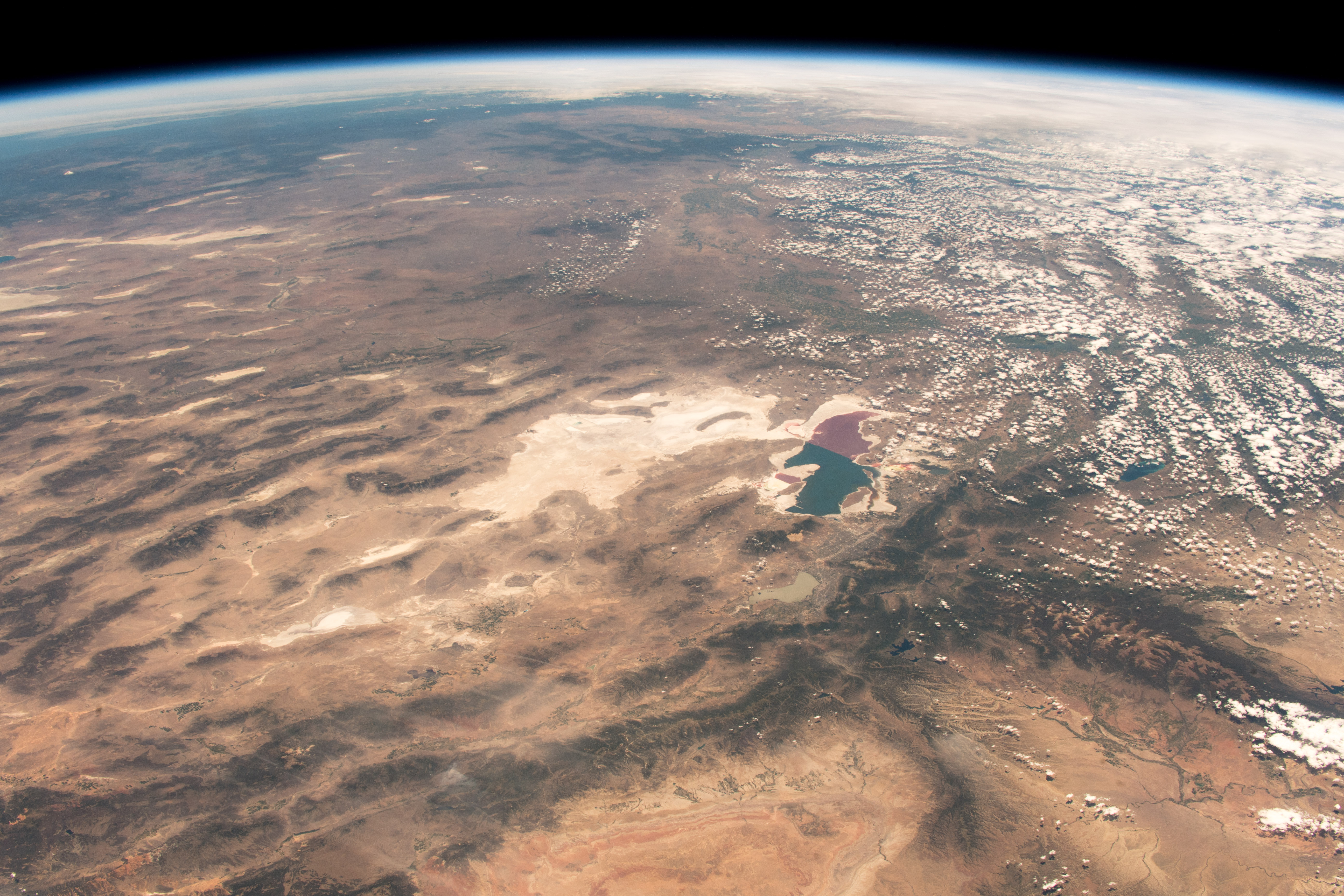
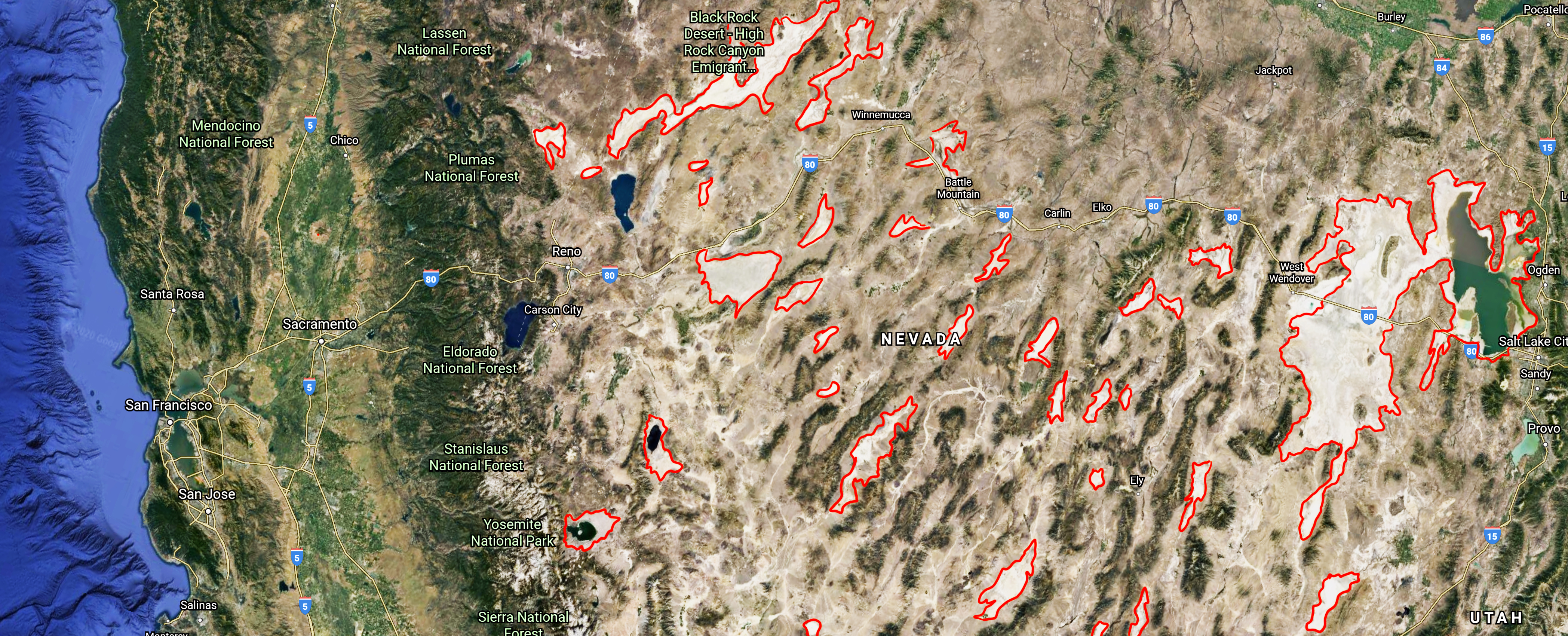
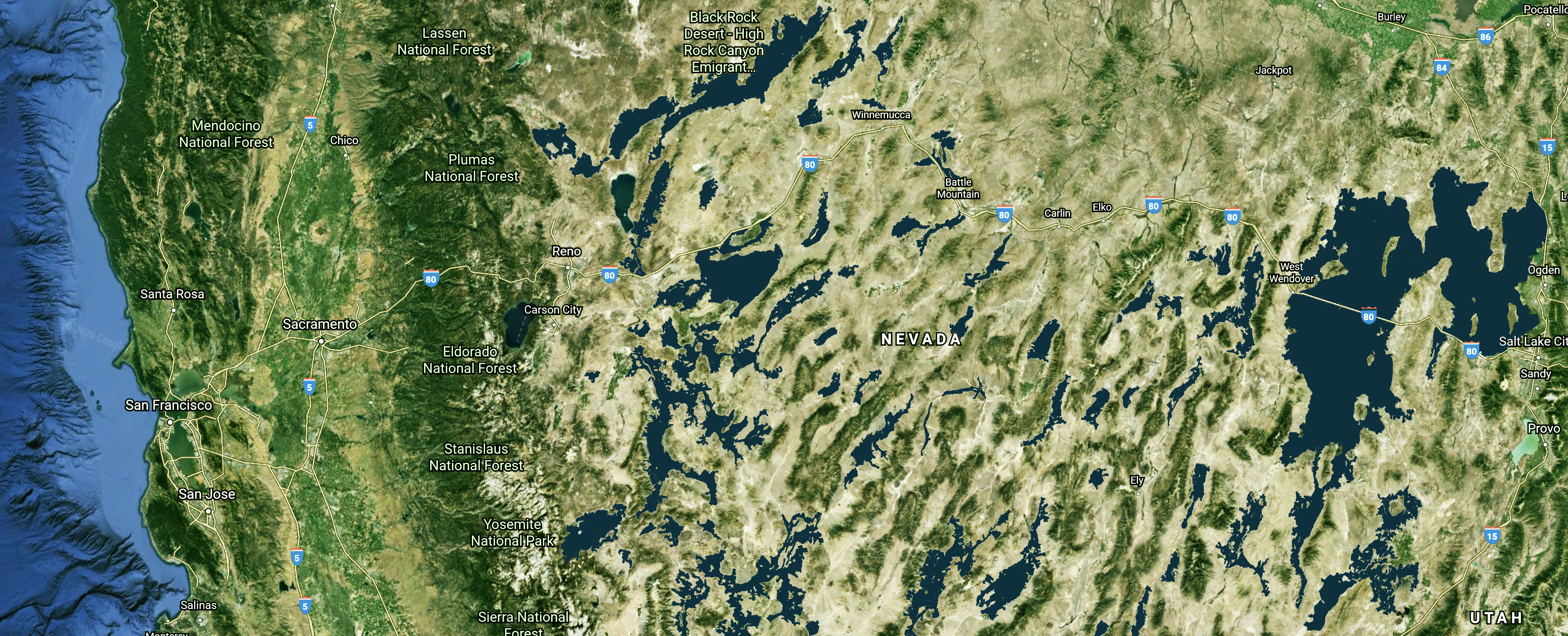
All across the Great Basin there are dried saline lakes. They’re mostly dry because of water diversion — and each one generally sits next to a small mountain ridge where an upper reservoir could be placed.
The Archimedes Screw is a chain of pumped-hydro batteries that moves water from the west coast up over the Sierra Nevada, traveling the I-80 corridor into the Great Basin, with its final stop at the Great Salt Lake. Here’s how it works:
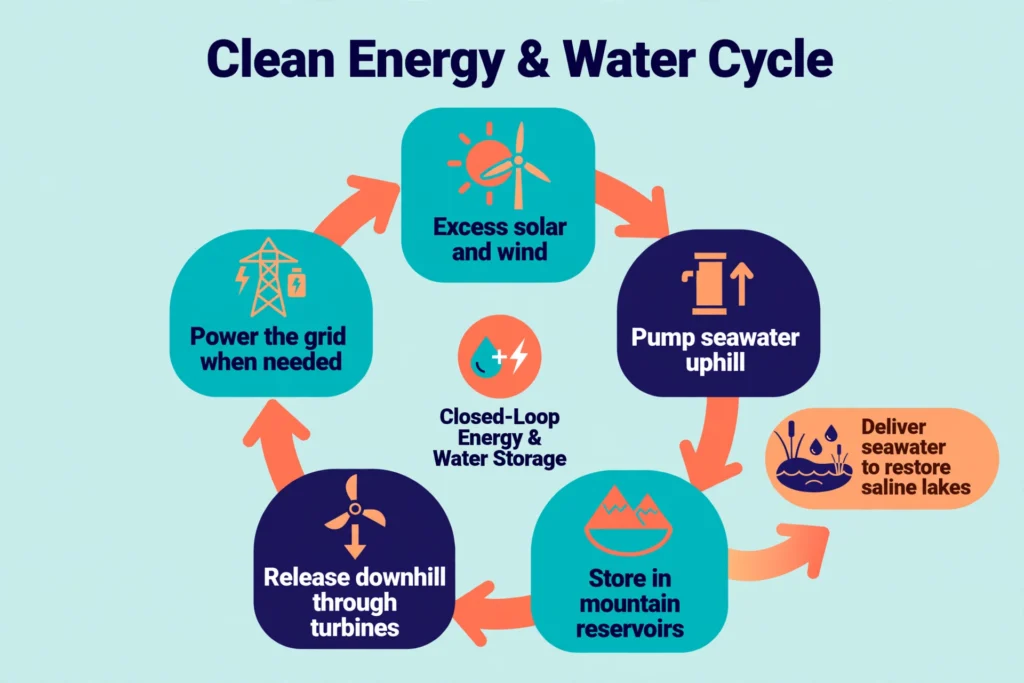
- When there’s excess renewable energy, we pump water uphill to staging reservoirs in the Sierra Nevada.
- When the grid needs power, we discharge it downhill — and it’s effectively downhill all the way to the Great Salt Lake.
- Along the way, we recharge the collapsed saline lakes. When the region has excess power again, we pump to the next staging reservoir. Rinse and repeat.
It’s a massive geoengineering project with an extraordinary side effect: restoring an ecosystem. The region gets its water back while humans continue diverting the freshwater they depend on. Energy storage and ecological restoration, in the same infrastructure.
The idea, updated: seawater changes everything
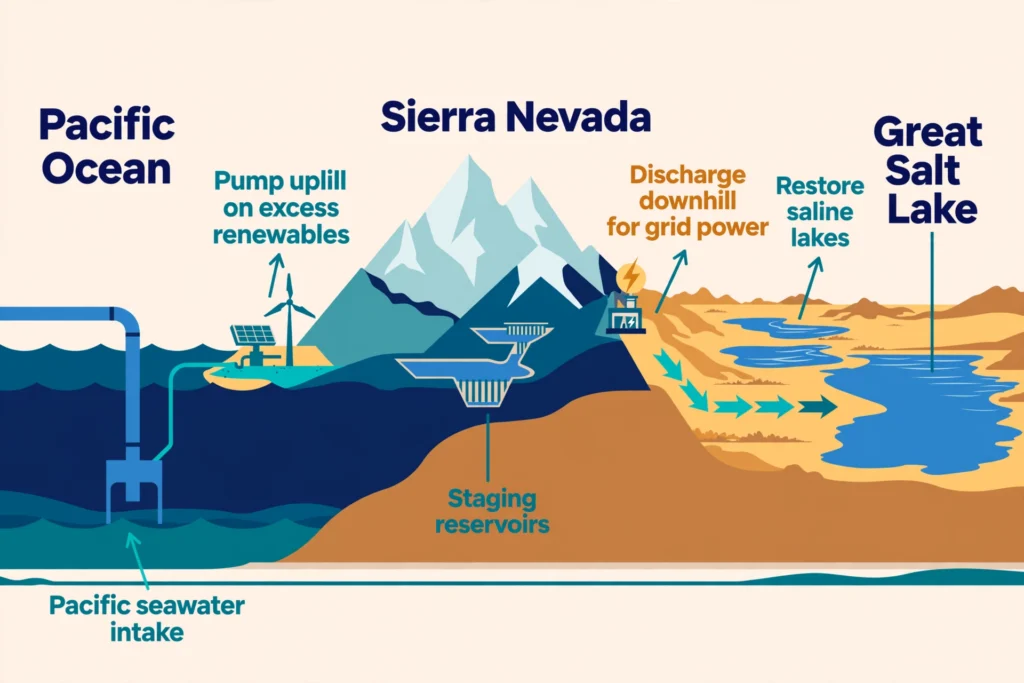
Since the talk, the concept has gotten sharper — and simpler. The water is seawater, pumped directly from the Pacific and conveyed unchanged: no treatment, no desalination in transit. The destination lakes receive real seawater. That single choice dissolves the hardest problem in Western water — nobody owns the ocean, so there are no water rights to fight over.
The Great Salt Lake’s south arm has grown dangerously salty as the lake shrank. Seawater runs about 3.5% salt. Delivered seawater doesn’t just refill the lake; it dilutes the south arm back toward the 12–16% range its brine shrimp and bird food webs need.
The economics got better too. The pumping is grid-scale energy storage — pump uphill on excess renewables, discharge downhill when the grid needs power — so the lift pays for itself. Where freshwater is actually needed inland, a side stream is desalinated, with the concentrated brine returned to already-hypersaline terminal lakes. And the reservoirs could host inland marine fish and shrimp farming, hundreds of miles from the coast.
The scale (illustrative)
- Storage: 10 installations × 1 GW × 12 hours = 120 GWh — about five times the largest pumped-storage plant in the US (Bath County, Virginia).
- Water: roughly 1.5 million acre-feet per year — nearly twice the Great Salt Lake’s estimated 800,000 acre-foot annual deficit.
- Program cost: on the order of $25–45 billion; roughly 400,000 to 850,000 job-years of employment across a multi-decade build.
Read the full proposal
- Concept brief (PDF) — the case for the program: storage economics, lake restoration, jobs, and spin-off industries.
- Feasibility study scope (PDF) — a staged, gated plan for the formal study that must precede any construction decision: what it would prove, what it would cost, and the go/no-go gates.
What’s next
The concept brief asks one thing: fund the Phase 0 fatal-flaw screen — a $1–3M desktop study to prove or kill the idea on engineering and economics before a dollar of construction is contemplated.
Why I’m posting it now
I gave this talk six years ago, and the idea has only gotten more urgent. The Great Salt Lake is in crisis, Utah is searching for solutions, and there’s federal attention on the problem. If the people working on this see even a piece of the concept useful, then the talk did its job — published or not.